

The way clinical trial databases are built has changed significantly over the past decade. Not long ago, creating a study often required lengthy implementation cycles, specialized programmers, and extensive coordination between sponsors, CROs, and technology vendors. Even relatively small changes could trigger additional requests, implementation delays, and lengthy review processes.
Today’s clinical trials move much faster. Study teams are managing increasingly complex protocols, responding to amendments more frequently, and looking for ways to accelerate study startup without compromising quality or regulatory compliance. As a result, many sponsors are rethinking how study databases are built and who should have the ability to configure them.
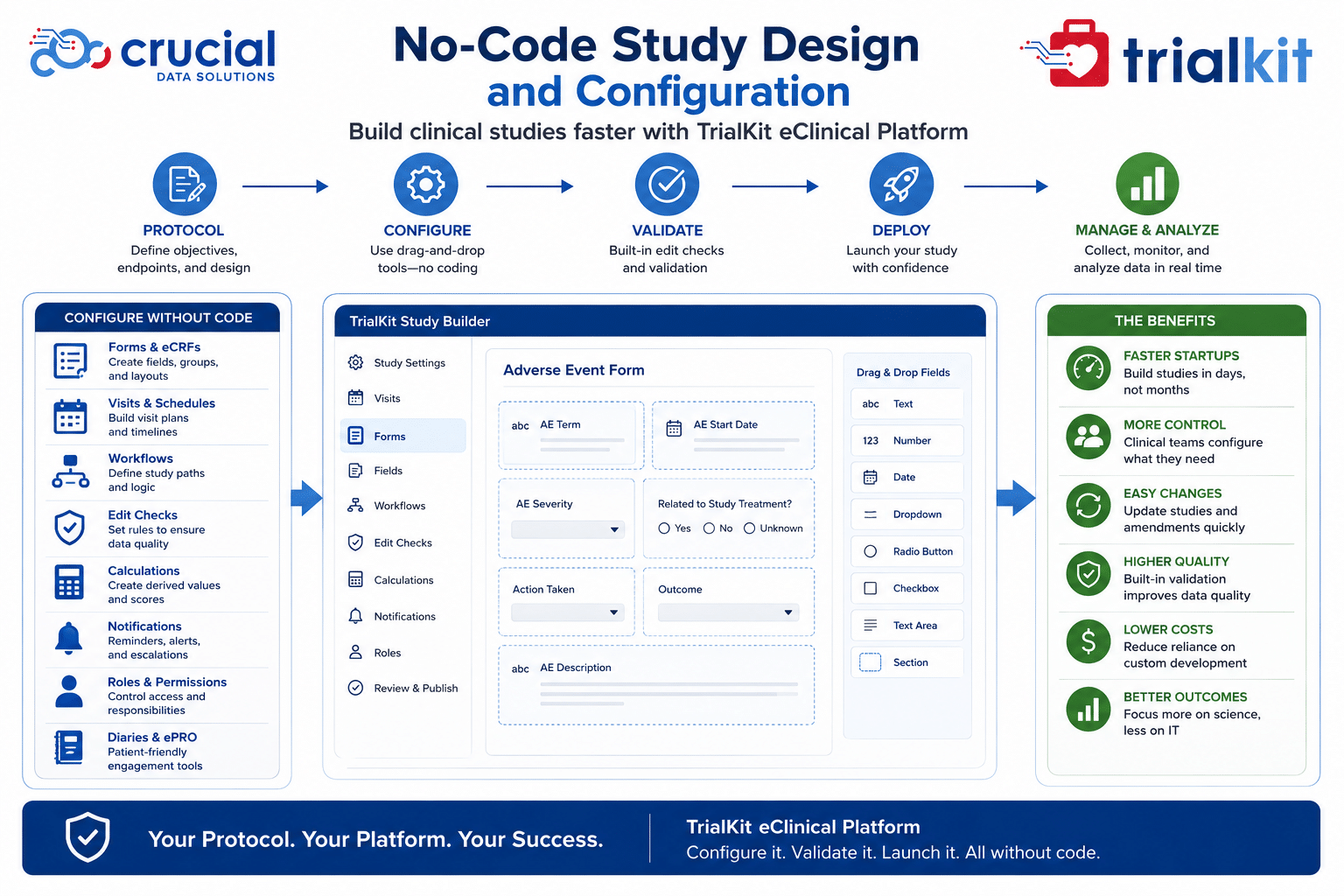
Modern electronic data capture (EDC) platforms have made it possible for sponsors and CROs to take a more active role in study configuration. Rather than relying exclusively on vendor-managed database builds, organizations can configure, modify, and validate many aspects of their studies using intuitive, drag-and-drop tools.
The result is greater flexibility, faster decision-making, and more control over the study lifecycle.
How Traditional EDC Study Builds Can Create Bottlenecks
Traditional implementation models were designed around a different era of clinical research. Study teams would finalize a protocol, deliver specifications to a technology provider, wait for database development, review the completed build, request revisions, and repeat the process until the study was ready to launch.
While this approach remains appropriate for some organizations and studies, it can introduce delays whenever study requirements evolve. Protocol amendments, revised visit schedules, updated forms, or new workflows often require additional coordination between multiple organizations before changes can be implemented.
As studies become more adaptive and timelines become more compressed, these dependencies can create operational bottlenecks that extend beyond database development itself.
Sponsors Already Own the Most Important Study Decisions
Technology providers play an important role in delivering secure, compliant platforms. The scientific and operational decisions that define a study, however, continue to come from sponsors and their research partners.
Eligibility criteria, endpoints, visit schedules, data collection requirements, and operational workflows are all determined before database configuration begins.
Giving study teams greater control over how those decisions are translated into the study database can reduce unnecessary handoffs and help ensure that protocol intent is preserved throughout implementation. For many organizations, this represents a shift from managing vendors to actively managing study execution.
How Modern EDC Systems Simplify Study Configuration
Advanced EDC platforms have reduced the need for specialized programming during routine study configuration. Visual builders, reusable libraries, configurable edit checks, workflow automation, and template-driven design allow study teams to create and modify studies without relying on custom code for every change.
But this doesn’t eliminate the need for technical expertise. Instead, it allows experienced clinical teams to manage many routine configuration tasks themselves while technical resources focus on more specialized requirements. This can translate to shorter implementation timelines, faster protocol updates, and more flexibility throughout the life of the study.
Greater Control Supports Faster Study Startup
Study startup depends on more than protocol approval and site activation. Database configuration, user acceptance testing (UAT), validation, training, and operational readiness all influence how quickly a study can begin enrolling participants.
When organizations have greater visibility into the study build process, they can often complete these activities more efficiently and respond more quickly when changes occur. This flexibility becomes particularly valuable when protocol amendments are introduced before or during enrollment.
Rather than waiting for multiple implementation cycles, study teams can evaluate changes, update configurations, complete validation activities, and move forward with greater confidence.
AI Is Creating New Opportunities for Study Builds
Artificial intelligence is beginning to reshape another stage of study development. Instead of starting every study from a blank database, AI-assisted tools can help researchers accelerate study configuration by generating forms, suggesting edit checks, evaluating study logic, and supporting validation activities.
Study simulation introduces another layer of insight by allowing organizations to evaluate how study workflows, data collection requirements, and database configurations may perform before participants are enrolled. These capabilities are helping teams spend less time on repetitive configuration activities and more time evaluating study quality and operational readiness.
Control Doesn’t Mean Working Alone
Taking greater control of study builds doesn’t mean eliminating technology partners or CRO expertise. Many organizations continue to rely on external partners for study design, data management, monitoring, statistical programming, and operational support.
Modern eClinical platforms simply provide greater flexibility in how that work is performed. Sponsors can choose the level of involvement that best fits each study while maintaining greater visibility into study configuration and responding more quickly when requirements change. This flexibility is becoming increasingly important as clinical trials continue to evolve.
How TrialKit Supports Sponsor-Controlled Study Builds
TrialKit was designed to give sponsors and CROs greater control over study development without sacrificing quality, compliance, or flexibility.
Its drag-and-drop study builder allows organizations to configure forms, edit checks, workflows, visit schedules, and study logic through an intuitive interface while maintaining full audit trails and validation capabilities. As studies evolve, teams can update configurations, validate changes, and manage amendments without relying on lengthy implementation cycles for routine modifications.
More recently, TrialKit AI has expanded these capabilities by supporting AI-assisted protocol and study design, study simulation, and validation. These tools help organizations evaluate study designs earlier, identify potential issues before launch, and accelerate the transition from protocol to production-ready database.
Conclusion
Clinical trial study builds are no longer limited to lengthy implementation projects managed entirely by external vendors. Today’s configurable platforms give sponsors and CROs greater flexibility to build, refine, and validate studies while maintaining control over the decisions that shape study execution.
As protocols become more complex and timelines become more compressed, organizations that can respond quickly to change without introducing unnecessary operational overhead will be better positioned to accelerate study startup and support high-quality clinical research.
Learn More About TrialKit
TrialKit combines drag-and-drop study configuration, AI-assisted study development, study simulation, and integrated validation capabilities within a unified, regulatory compliant eClinical platform.
If you’re looking for a more flexible approach to clinical trial study builds, contact our team to schedule a personalized demonstration and see how TrialKit can support your next study.