-

How Protocol Design Decisions Shape Recruitment, Data Quality & Study Startup
Protocol amendments, recruitment delays, data quality issues, and operational bottlenecks are often discovered during study execution. That does not necessarily mean they originate there. In many cases, the underlying issue can be traced back to protocol decisions that seemed reasonable during study design but created unintended downstream consequences once sites, participants, and study teams began…
-

Where Study Simulation Fits in Clinical Trials
Experienced clinical trial teams know where challenges tend to emerge, from slower-than-expected enrollment to endpoints that behave unpredictably and operational strain that builds over time. The problem is not awareness, but timing. These issues usually become clear only after a study is underway, when adjustments are harder and more costly to make. AI study simulation…
-

How AI Activates the Full Potential of Wearables in Clinical Research
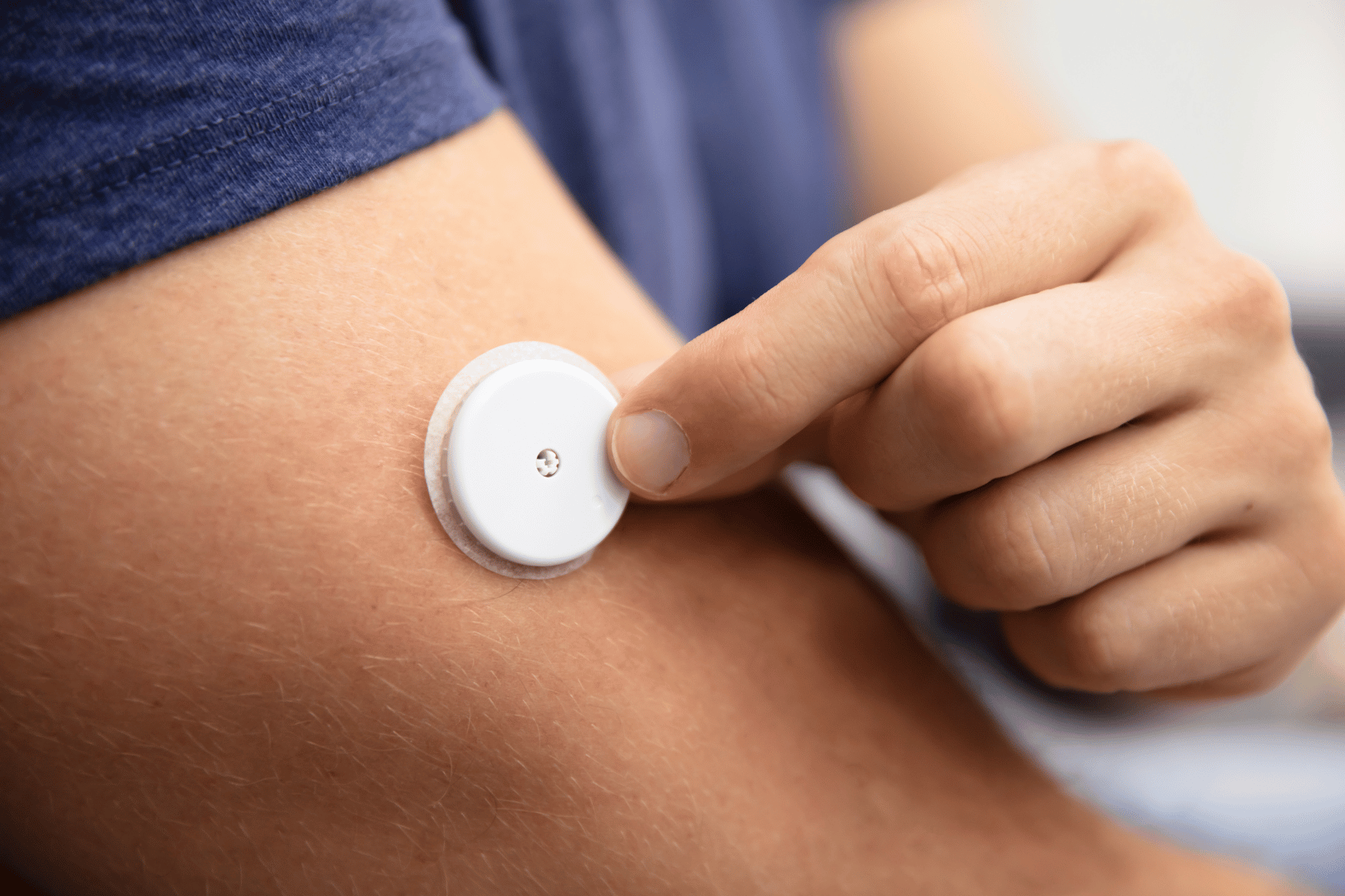
Wearables are no longer experimental. Smartwatches, activity trackers, connected scales, and mobile health apps are already part of daily life for millions of people. In clinical research, they offer something sponsors have wanted for decades: continuous, real-world insight into how patients are actually functioning outside the clinic. But there is a gap between collecting wearable…
-
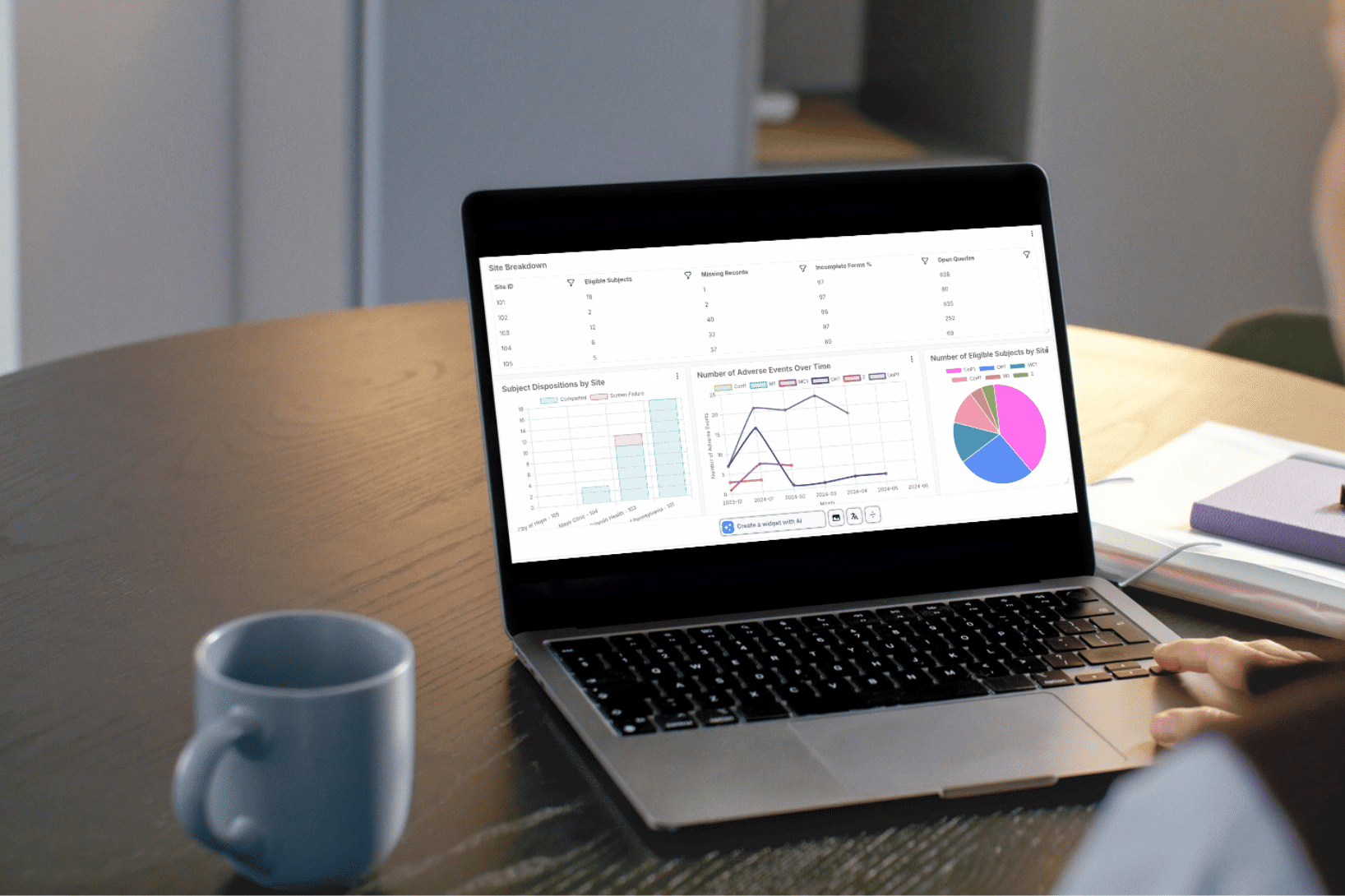
AI Implementation Challenges with Legacy EDC Systems: Is Your EDC Limiting the Impact of AI on Your Data?
AI is increasingly being adopted in clinical trials to help teams keep pace with growing data demands. The goal is clear: reduce manual effort, surface insights sooner, and support better decisions. But for many sponsors, those benefits are harder to realize in day-to-day trial work. Often, the challenge is not the AI itself. It is…
-

AI in Clinical Trials: 5 Practical TrialKit Use Cases for Data Management
Clinical data managers spend much of the study turning a growing volume of information into something teams can review, trust, and use. That work includes tracking data completeness, resolving queries, monitoring site activity, preparing reports, reconciling sources, and keeping stakeholders informed as the study moves toward closeout. TrialKit brings data capture, query management, reporting, analytics,…
-
Smarter Clinical Trials for CNS and Pain with AI Analytics
Clinical trials in pain and neurological research have historically faced steep hurdles: lengthy timelines, high costs, and subjective data endpoints that often obscure true efficacy. With only around 15% of central nervous system (CNS) drugs successfully moving from Phase 1 to approval, researchers clearly need more reliable tools. Artificial intelligence (AI) analytics has emerged as…
-

Ensuring Regulatory Compliance When Using Wearables in Clinical Trials
Regulatory Risks of Wearables in Clinical Trials Are Real (and Avoidable) Wearables have become indispensable in modern clinical trials, tracking vital signs, capturing real-world evidence, and improving patient engagement from anywhere. But as their use increases, so do the regulatory risks. While wearable devices open the door to faster, more patient-centric research, they also introduce…
-
The Future of Remote Patient Monitoring in Decentralized Clinical Trials
The Evolution of Remote Patient Monitoring in Clinical Trials Remote patient monitoring (RPM) has come a long way from the early days of paper-based symptom diaries and intermittent in-clinic assessments. Traditional monitoring approaches placed a heavy burden on both patients and research sites, requiring frequent visits, manual data entry, and limited insight into patient health…
-
From Data Capture to Clinical Intelligence: How AI Is Expanding EDC in Clinical Trials
Electronic data capture (EDC) has traditionally occupied a clearly defined place in the clinical trial lifecycle. Once a protocol is designed and a study database is built, the EDC becomes the environment where clinical data is collected, reviewed, queried, and prepared for analysis. Artificial intelligence is beginning to expand that role. Rather than applying AI…
-
The Digital Teammate: How AI is Changing How Clinical Research Teams Work
A protocol may define how a clinical study should operate, but turning those requirements into a working study still requires extensive configuration, testing, and refinement. AI embedded within the eClinical platform can help teams move through that work more efficiently by translating requirements into study components, testing how those components behave, and making study data…