

The Growing Importance of API Integrations in Clinical Trials
Clinical trials now depend on a wide range of digital technologies to collect and manage study data. Electronic data capture systems (EDC), eCOA platforms, laboratory systems, imaging repositories, wearable devices, and patient-facing applications all contribute information to the study dataset. As these tools have matured, both the volume of data and the number of systems generating it have increased.
For many years, these technologies evolved independently. Vendors built platforms designed to solve specific operational problems, and each system often performed its job well. The question of how those systems would exchange data was usually addressed later. Study teams frequently relied on manual exports, batch uploads, or custom integrations to move information between platforms.
That model worked when trials involved fewer technologies and smaller datasets. Modern studies look very different. Decentralized trial components, digital biomarkers, remote monitoring technologies, and patient-facing applications have expanded both the scope of data collection and the number of systems involved in generating it.
As this ecosystem grows, the ability of these technologies to work together smoothly becomes an operational necessity. Application Programming Interfaces, or APIs, make that possible. When eClinical platforms are built with integration capabilities at their core, different technologies can exchange information automatically and securely. Instead of functioning as isolated tools, they become part of a connected data environment that supports the broader objectives of the trial.
The Operational Cost of Fragmented Trial Systems
Clinical trial technology developed gradually as new needs emerged. Electronic data capture replaced paper case report forms. ePRO platforms allowed patients to report outcomes directly. Randomization systems managed drug supply, and imaging and wearable technologies added new ways to measure patient health.
Each innovation improved part of the research process. However, the systems themselves were rarely designed to operate together.
This often leaves study teams managing a fragmented technology environment. Data may be exported from one platform, transformed into another format, and uploaded into a second system before it becomes available for analysis. In trials involving multiple vendors and data sources, this process may repeat many times throughout the study.
Several operational challenges commonly arise in these environments:
- Data transfers often occur periodically rather than continuously, which limits real-time visibility into study activity
- Datasets produced by different systems frequently require manual reconciliation
- Integration issues can interrupt workflows and delay analysis
- Study teams spend considerable time managing data movement rather than interpreting results
These challenges can slow decision making and increase operational burden. As trials incorporate more digital tools and external data sources, clinical trial data integration becomes a central operational concern rather than a purely technical one.
What API Integrations Mean in a Clinical Trial Environment
An API integration allows software systems to communicate with one another through a standardized interface. In clinical research, APIs enable technologies such as electronic data capture systems, wearable platforms, laboratory systems, and patient applications to exchange information automatically.
Instead of relying on manual uploads or file transfers, systems connected through APIs can send and receive data as part of the study workflow. When a patient completes an assessment, the data can flow directly into the study database. When laboratory results are validated, they can be transmitted immediately to the eClinical platform.
This approach changes how trial technologies interact. Rather than operating as separate tools that require periodic synchronization, integrated systems function as components of a coordinated environment where information moves continuously.
From an operational standpoint, API integrations support clinical trials in several important ways:
- Automated data exchange reduces manual data handling
- Study teams gain faster access to operational and clinical data
- Standardized interfaces simplify integration across vendors and studies
- New technologies can be incorporated without major system redesign
These capabilities create a more coherent technology environment in which data generated across multiple platforms can be observed and managed within a shared framework.
Clinical Systems Commonly Connected Through APIs
As digital tools become more common in clinical research, many types of systems rely on APIs to exchange information. These integrations allow data generated by different technologies to contribute to the broader study dataset without manual intervention.
Systems frequently connected through APIs include:
- Electronic data capture systems that manage structured clinical data
- eCOA platforms that collect patient-reported outcomes
- Laboratory information systems that generate biomarker and diagnostic results
- Imaging repositories that store radiology assessments
- Wearable device platforms that capture physiological and activity data
- Patient engagement applications used in decentralized trials
Connecting these technologies through APIs allows sponsors to maintain a more complete view of study activity while coordinating data from multiple vendors and platforms.
Flexibility as a Requirement for Modern Trials
Clinical trials are changing in ways that make integration increasingly important. Decentralized study models allow participants to contribute data from outside the clinic. Mobile applications and wearable devices capture information in real-world settings. Real-world data sources may supplement traditional endpoints in certain therapeutic areas.
These innovations provide valuable insight into how treatments affect patients in everyday life. At the same time, they increase the number of systems that must operate within the study infrastructure.
Study teams therefore need technology environments that can adapt as new tools are introduced. API-driven architectures support this flexibility by allowing external systems to connect through standardized interfaces. Integrations that once required significant custom engineering can often be implemented through well-defined connection points.
This approach allows sponsors to expand the technological capabilities of a trial without disrupting existing data management workflows.
Integration and Data Oversight
Integrated systems also improve how study teams monitor the quality and completeness of clinical trial data.
When platforms operate independently, delays in data transfers can hide emerging problems. Missing datasets or transmission failures may not become visible until scheduled uploads occur. Investigators and monitors may therefore lack timely insight into how study data is evolving.
API integrations help address this challenge by allowing data to move between systems automatically. Information can be observed within the central platform as it arrives, which provides earlier visibility into operational and clinical activity.
This type of connectivity supports several important aspects of trial oversight:
- Monitoring participant adherence to digital data collection procedures
- Detecting transmission failures or missing datasets
- Identifying unusual patterns in incoming measurements
- Maintaining consistent data quality across multiple vendors
In complex studies involving many technologies, this visibility helps study teams respond more quickly when operational issues arise.
The Role of Integrated eClinical Platforms
The benefits of connectivity are most evident when integration capabilities are built directly into eClinical platforms.
Earlier generations of trial systems often treated integrations as custom extensions created separately for each study. These connections could be difficult to scale and required ongoing maintenance as technologies changed.
Many modern platforms are designed differently. Integration is built into the core architecture, with APIs allowing external technologies to connect through standardized interfaces.
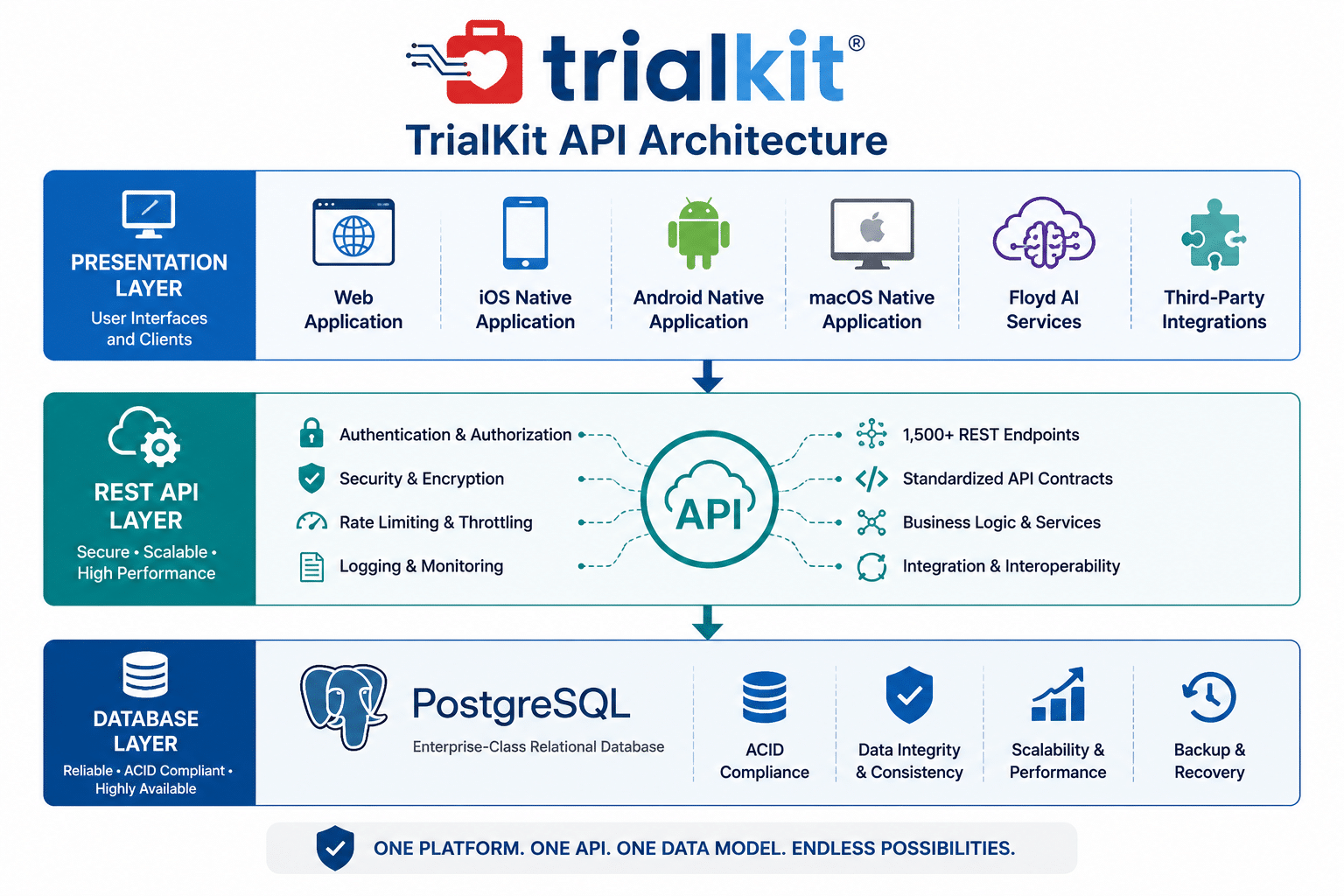
Within this model, the eClinical platform acts as the central hub of the study’s data environment. Patient applications, wearable devices, laboratory providers, imaging systems, and analytics tools can all contribute data through structured connections. Platforms such as TrialKit, for example, are designed to support this type of architecture, allowing data from external systems to flow into the study environment without creating separate data silos.
This approach gives study teams a more unified view of trial activity while maintaining the traceability and oversight required for regulated research.
Planning Integration Early in Study Design
As trials continue to incorporate more digital tools, integration planning becomes an important part of study design.
Sponsors benefit from considering interoperability early in the planning process. Decisions about which systems will exchange data, how frequently information should be transmitted, and how data lineage will be preserved can influence both technology selection and operational workflows.
Platforms that support standardized APIs make these connections easier to implement across studies. When integration requirements are addressed early, study teams can avoid operational bottlenecks and incorporate new technologies more smoothly as the trial progresses.
A More Connected Future for Clinical Research
The number of technologies used in clinical trials will continue to grow. Wearables, remote monitoring tools, patient engagement applications, and data repository environments are expanding the range of data available to researchers.
Managing this ecosystem requires infrastructure that can connect these systems in a reliable and secure way. APIs provide the foundation for that connectivity.
When eClinical platforms support flexible integration, study technologies can work together within a coordinated environment rather than operating independently. Data becomes easier to manage, operational workflows remain manageable, and study teams gain clearer insight into how trials are progressing.
Within this connected framework, technology does more than collect information. It helps create a more adaptable model of clinical research in which diverse sources of data can be brought together to support better oversight, stronger data quality, and more informed scientific decisions.
Learn more about API Integrations through TrialKit today.