
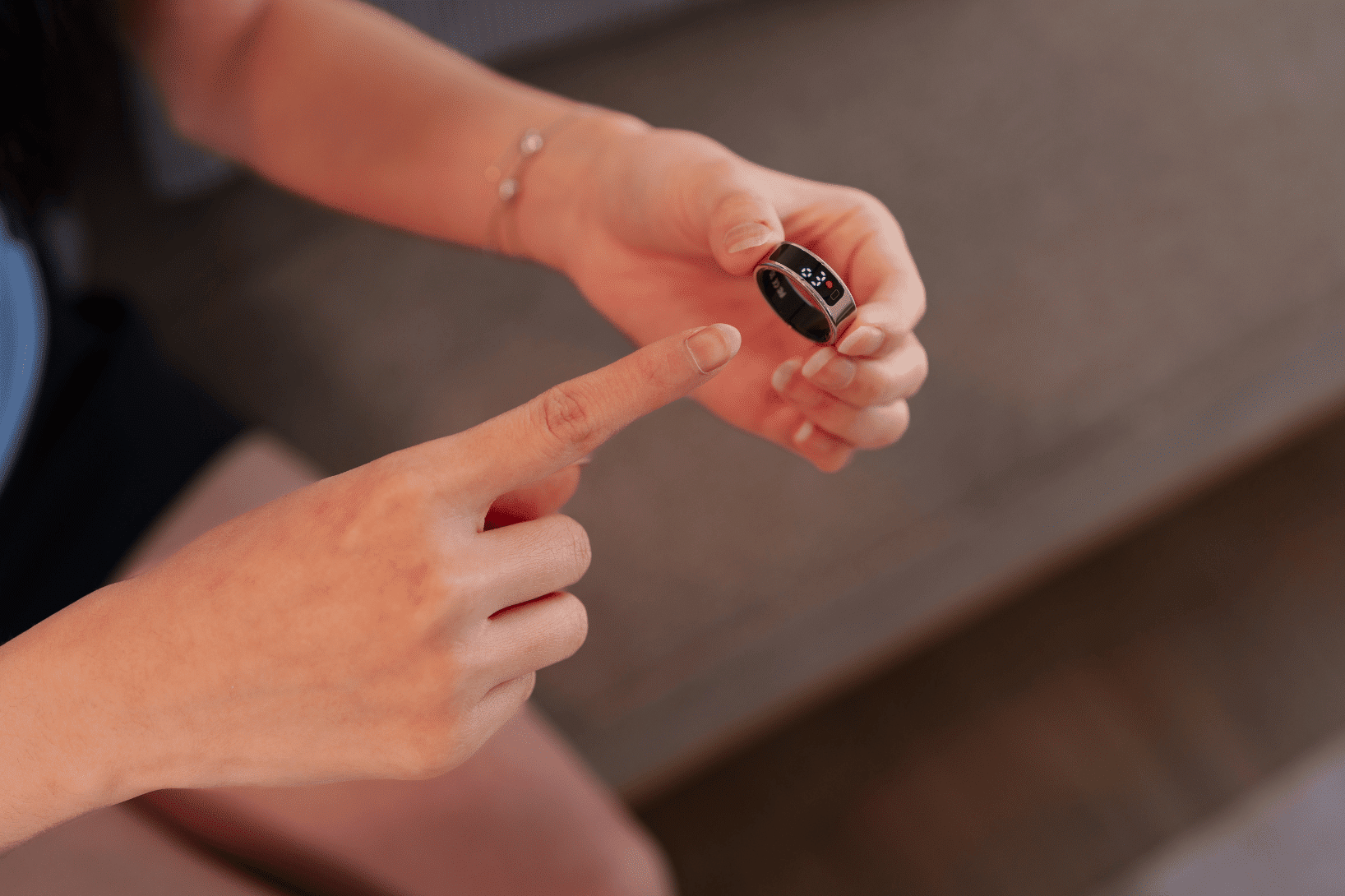
Wearables are no longer experimental. Smartwatches, activity trackers, connected scales, and mobile health apps are already part of daily life for millions of people. In clinical research, they offer something sponsors have wanted for decades: continuous, real-world insight into how patients are actually functioning outside the clinic.
But there is a gap between collecting wearable data and using it to support meaningful endpoints.
Raw sensor streams do not automatically translate into regulatory-grade evidence. Heart rate variability, step counts, sleep duration, and activity levels are just numbers unless they are structured, contextualized, and interpreted in a way that aligns with study objectives. That is where artificial intelligence, combined with a purpose-built clinical data platform like TrialKit, changes the equation.
Wearables generate volume. AI generates meaning. Together, they can elevate wearable data from exploratory signals to clinically meaningful endpoints.
The Promise of Continuous, Real-World Measurement
Traditional clinical assessments are episodic. A patient visits the site, measurements are taken, and a questionnaire is completed. Then the patient goes home, and the study team waits for the next visit.
This approach has limits: many diseases fluctuate throughout the day or week, symptoms may worsen in the evening, improve with activity, or vary based on stress and environment. A single in-clinic snapshot can miss important patterns.
Digital biomarkers and wearable-derived measures address this by increasing frequency and resolution. This kind of continuous digital measurement allows:
- High-frequency data capture that reflects day-to-day symptom variability
- Greater resolution to detect subtle changes
- Direct measurement of behaviors and physiological characteristics
- Improved reliability through sensor-based capture
- Stronger ecological validity by measuring patients in real-world settings
These are real advantages. However, they also introduce new complexity.
Continuous data collection can mean thousands of data points per participant per day. Multiply that across sites and countries, and the dataset quickly becomes massive. Without the right infrastructure and analytics strategy, that volume can overwhelm study teams.
The opportunity is clear. The operational and analytical burden is just as real.
The Core Challenge: From Signal to Endpoint
Wearables are excellent at producing signals, but endpoints require more.
A meaningful clinical endpoint must be:
- Clearly defined and reproducible
- Scientifically justified
- Tied to how a patient feels, functions, or survives
- Captured in a way that is traceable and auditable
Wearables typically provide raw or semi-processed data such as step counts, accelerometer output, heart rate, or sleep cycles. Those data streams must be cleaned, standardized, contextualized, and often combined with other sources before they can support an endpoint.
This is where AI plays a central role.
AI models can identify patterns across high-dimensional time-series data. They can detect deviations from baseline, classify activity types, correlate physiologic changes with patient-reported outcomes, and surface trends that would be nearly impossible to spot manually.
However, AI cannot operate in isolation from the broader trial infrastructure. It must be integrated into a validated data environment that supports compliance, traceability, and oversight.
That integration is what makes the difference.
AI as the Engine for Interpretation
When thoughtfully deployed, AI enables three key advances in wearable-driven trials.
1. Pattern Recognition at Scale
Continuous wearable data is noisy. There are gaps in transmission, variability in adherence, and environmental influences that can distort interpretation.
AI algorithms can filter noise, flag anomalies, and learn what constitutes meaningful change for a given population. Instead of treating every fluctuation as equal, models can identify trends that correlate with disease progression or treatment response.
For example, rather than looking at daily step count in isolation, AI can evaluate multi-week trajectories, variability patterns, and associations with symptom reports. The result is a more clinically relevant holistic view.
2. Personalization and Baseline Modeling
Not all patients start from the same baseline. One participant’s normal may look very different from another’s.
AI can establish individualized baselines and detect deviations relative to each participant’s historical pattern. This is particularly valuable in conditions where intra-patient change matters more than cross-sectional comparison.
By modeling individual trajectories, AI supports endpoints that reflect meaningful change rather than population averages alone.
3. Multimodal Data Fusion
Wearables rarely operate alone. In modern trials, they sit alongside electronic data capture, electronic clinical outcome assessments (eCOA), laboratory values, and imaging results.
AI can integrate these modalities. A change in sleep pattern may align with a shift in patient-reported fatigue. Activity reduction may correlate with biomarker changes. By combining structured and semi-structured data sources, AI helps uncover relationships that strengthen the clinical narrative behind an endpoint.
None of this works if the data remains siloed.
Why Platform Matters: TrialKit as the Foundation
AI capabilities are only as strong as the data environment in which they operate.
TrialKit is designed as an end-to-end clinical data platform, which means wearable data does not exist in a separate ecosystem. It is collected, managed, and monitored within the same framework that supports electronic data capture, eCOA, and other study components.
Through integrations with sources such as Apple Health, Google Health Connect, and Fitbit, wearable and health activity data can flow directly into the study database. That direct integration offers several advantages:
- Centralized oversight of all study data
- Consistent data standards and structure
- Real-time visibility into adherence and data completeness
- Reduced need for external data reconciliation
When wearable data is ingested into the same validated system as other study data, it becomes part of the official study record rather than an exploratory side stream.
This is critical for endpoint development.
Study teams can define calculated fields, derived variables, and composite measures within the platform. AI models, like those embedded in TrialKit, can operate on structured datasets that are version-controlled and auditable. Monitors and data managers maintain visibility without exporting large datasets into disconnected tools.
The result is a tighter link between raw signal and regulatory-ready dataset.
Supporting Meaningful Endpoints in Practice
To translate wearable data into endpoints that matter, sponsors must align technology with study design from the beginning.
Several principles help ensure success:
Define the Clinical Question First
Wearables should not be added simply because they are available. Each digital measure must tie back to a clearly articulated hypothesis.
Is the goal to measure functional mobility? Detect exacerbations earlier? Quantify sleep disturbance? The endpoint definition should drive the selection of sensors and analytics strategy.
Embed Wearables into the Protocol, Not as an Afterthought
When wearable data is part of the core endpoint strategy, it is reflected in the statistical analysis plan, monitoring plan, and data management workflows.
TrialKit supports this by allowing wearable-derived fields to be integrated directly into case report forms and downstream analysis datasets.
Monitor Data Quality in Real Time
High-frequency data is only useful if it is complete and reliable. Real-time dashboards within the platform allow study teams to track adherence, identify missing data, and intervene early when transmission drops.
This operational layer ensures that AI models are trained on robust datasets rather than fragmented records.
Maintain Traceability and Compliance
For wearable-derived endpoints to withstand scrutiny, every transformation must be traceable. Data lineage, audit trails, and controlled access are not optional.
By keeping wearable ingestion and AI-driven derivations within a validated clinical environment, sponsors preserve the documentation needed for inspection readiness.
Moving Beyond Exploratory Use
Historically, many wearable initiatives in clinical trials were labeled exploratory. Data was collected, analyzed post hoc, and used primarily to generate hypotheses.
AI and integrated platforms change that trajectory.
With robust data capture, structured integration, and advanced analytics, wearable-derived measures can move closer to secondary or even primary endpoint status in appropriate contexts.
Continuous activity monitoring can provide objective evidence of functional improvement. Sleep metrics can support neurological or psychiatric indications. Physiologic signals may complement traditional assessments in cardiometabolic studies.
As the field matures, the question shifts from whether wearables can add value to how to deploy them responsibly and effectively.
The Future: Real-World Evidence Within the Study Itself
One of the most compelling aspects of wearable technology is that it measures patients in their real, everyday lives. That real-world dimension strengthens the relevance of collected data. It aligns measurement more closely with lived experience.
When AI extracts clinically meaningful patterns from those real-world signals, and when a platform like TrialKit ensures they are captured in a compliant and analyzable format, sponsors gain something powerful: endpoints that reflect both scientific rigor and real patient impact.
- Wearables generate the data
- AI interprets the patterns
- An integrated clinical platform turns those insights into evidence
The value of wearables in clinical trials does not come from the device on a participant’s wrist. It comes from the system that surrounds it.
By combining continuous data capture, advanced analytics, and unified infrastructure, sponsors can move beyond collecting digital noise and begin defining endpoints that truly reflect how patients feel and function in the real world.
That is when wearable data stops being interesting and starts being meaningful.
For more information on how TrialKit and its built-in AI capabilities can help you get the most out of wearable data, contact us today.