TrialKit for Education Research
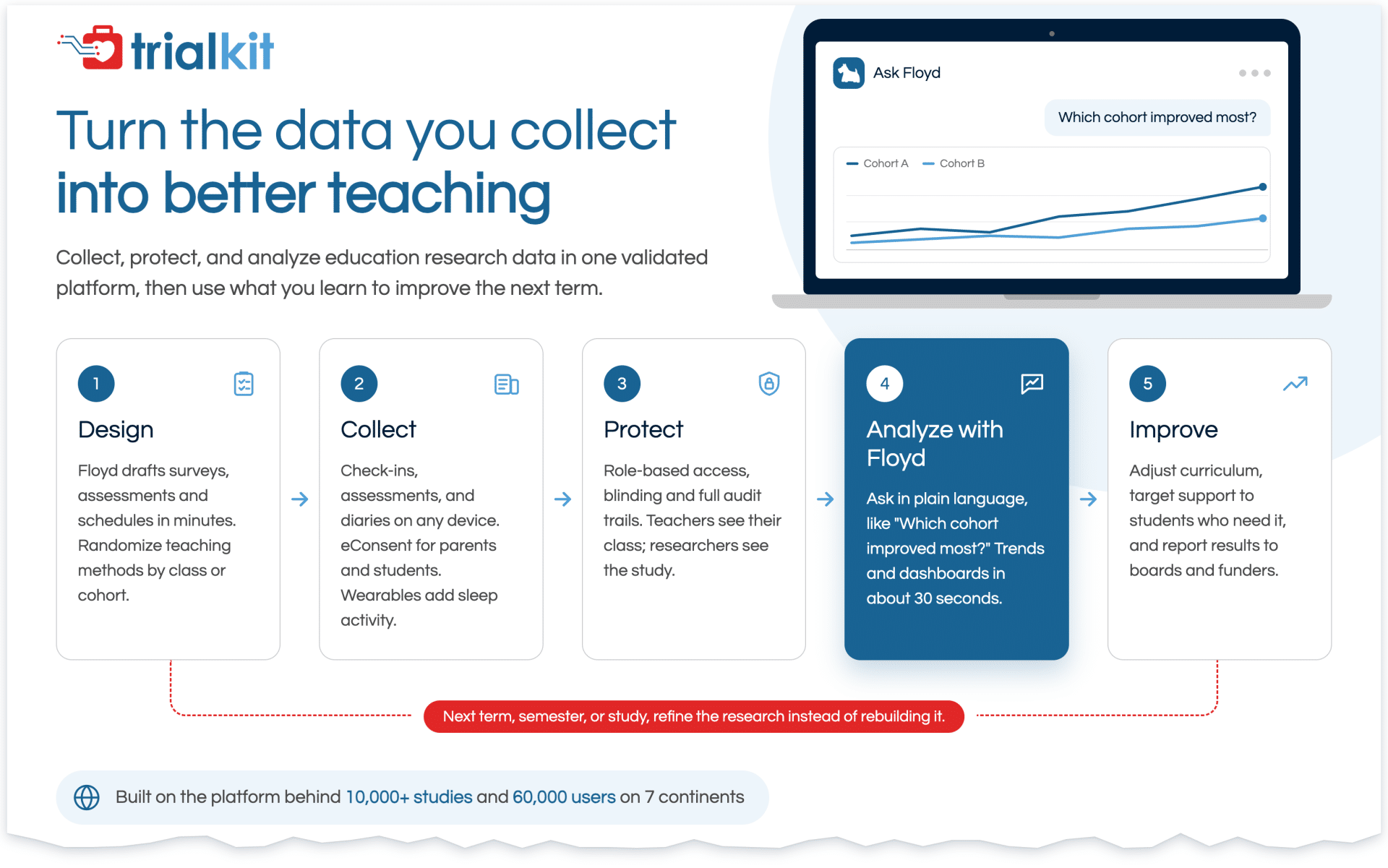
Turn the data you collect into evidence that can improve education.
Build Stronger Evidence in Education

Educators and education leaders are continually looking for better ways to support student success. But understanding which programs, interventions, products, and instructional approaches are actually producing meaningful outcomes can be difficult when research data is spread across systems or the tools available were not designed to manage the full study process.
TrialKit was originally built for clinical trials, where structured study design, participant consent, data traceability, and standardized collection are fundamental. Those same research principles can support education studies and program evaluation.
TrialKit gives education researchers and organizations one unified platform to design studies, collect and manage research data, compare cohorts, and analyze outcomes.
Questions Education Research Can Help Answer
From instructional approaches to student wellbeing, education research can help teams examine how programs and interventions affect outcomes over time.
Does a later school start time affect student sleep, attendance, and academic outcomes?
Combine assessments or school data with participant-reported measures and, where appropriate, wearable data to study changes over time.
Which tutoring or instructional model produces better outcomes?
Compare groups or cohorts using consistent assessments and structured study procedures.
How does student wellbeing change throughout a semester or school year?
Collect repeated surveys and other longitudinal measures to understand patterns across time.
Does a new education program produce measurable results?
Track implementation and outcomes to build evidence around whether an intervention is achieving its intended goals.
Support Different Approaches to Education Research
Configure TrialKit around the type of research you need to conduct, from intervention studies and program evaluation to longitudinal research and EdTech efficacy studies.
Education Intervention Studies
Study instructional strategies, literacy programs, tutoring models, behavioral interventions, curriculum changes, and other approaches using consistent research methods and structured outcome measurement.
Education Program Evaluation
Collect implementation and outcome data to understand how a program is performing, how results differ across participants or locations, and where further study may be needed.
EdTech Efficacy Research
Design studies that examine whether an education technology product or digital intervention produces measurable outcomes for learners. TrialKit can support structured data collection, participant management, comparison groups, and longitudinal measurement as evidence develops.
Longitudinal Education Research
Follow participants, classrooms, cohorts, or programs across multiple time points to understand change over a semester, academic year, or longer research period.
Why Choose TrialKit for Education Research?
TrialKit combines configurable study management, flexible data collection, and built-in intelligence to support education research across the study lifecycle.
Built to Manage the Full Research Process
Bring study design, data collection, participant management, oversight, and analysis together in one environment rather than managing different parts of the study across separate tools.
Configure Studies Around Your Research
Build custom forms and workflows, reuse existing study components, and make changes as research needs evolve. The TrialKit platform supports reusable configurations and self-service study building.
Put Floyd to Work Across the Study Lifecycle
Use Floyd to support study development, simulation, validation, and analysis, giving research teams built-in intelligence from study setup through review of resulting data.
Connect More of the Research Dataset
Bring external data and connected sources into the study so researchers can work with a more complete dataset throughout the evaluation.
Support Randomized and Observational Research
Configure cohorts and use TrialKit’s randomization capabilities when an experimental design requires participant or group assignment. TrialKit includes randomization functionality within the unified platform.
Bring Education Research Data Together
Research questions rarely depend on a single data point. TrialKit provides a unified environment for bringing together structured and participant-generated research data across a study.
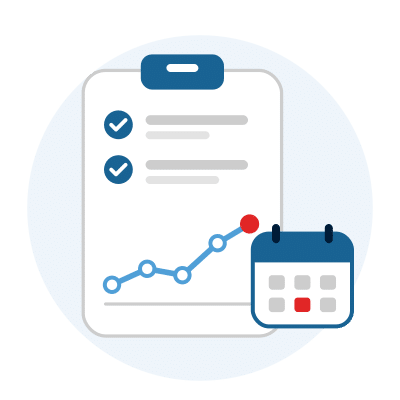
Assessments
Track standardized or study-specific measures over time.
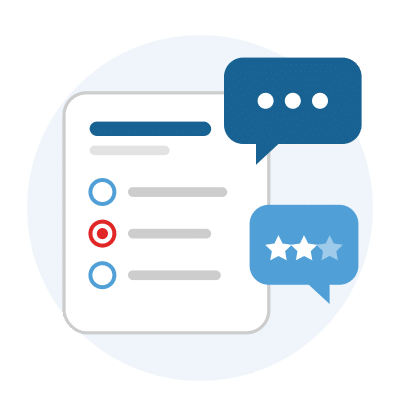
Surveys and Questionnaires
Capture participant, educator, parent, or stakeholder perspectives.
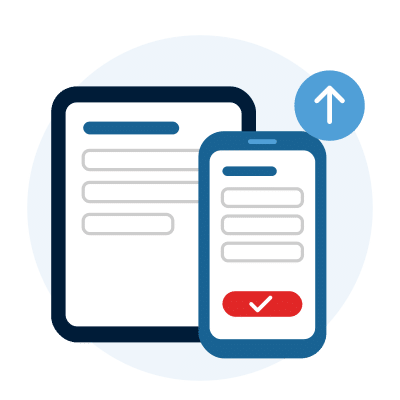
Mobile Data Collection
Allow approved users or participants to submit study data from smartphones and tablets.
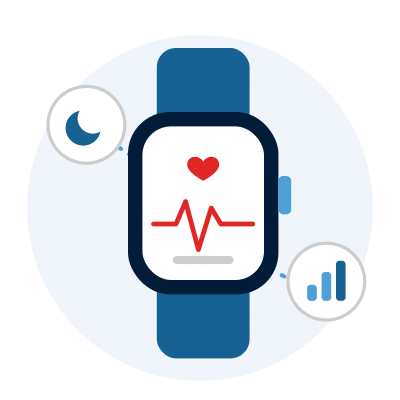
Wearables and Connected Devices
In research where physical activity, sleep, or other sensor-derived measures are relevant, connect external data sources to the study.
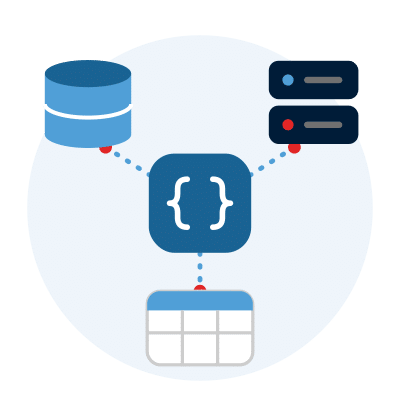
External Data Sources
Use TrialKit’s REST API to exchange data with external systems and databases.