
Electronic Data Capture (EDC) System
Capture, validate, and manage clinical trial data in one unified EDC system. Build and adapt studies with flexible configuration tools, manage data across sites and devices, and use Floyd, TrialKit’s AI model, to support study setup, validation, and analysis.

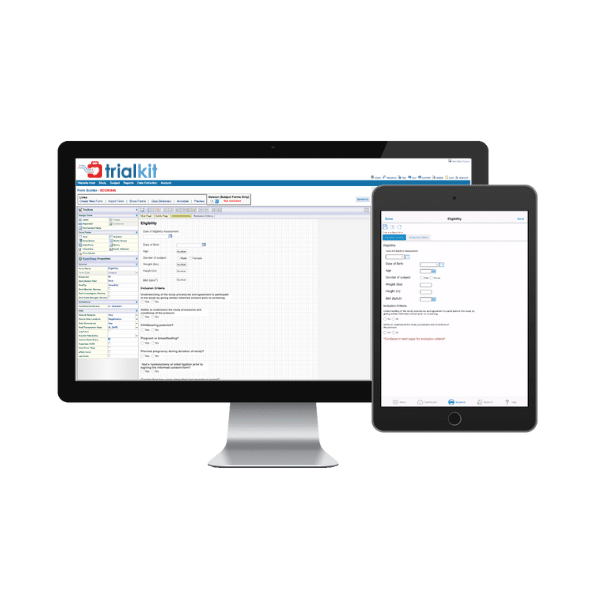

Clinical Trials Demand More From EDC Technology
Clinical research teams need EDC software that can accommodate complex protocols, support evolving study requirements, and give stakeholders timely access to reliable data.
TrialKit combines configurable electronic data capture with native mobile applications, integrated data management tools, and flexible study workflows. Teams can build, validate, deploy, and manage studies while maintaining control over how data is collected, reviewed, and analyzed.
With Floyd embedded in TrialKit, researchers can also use AI to assist with study configuration, test data generation, and analysis, extending the role of EDC across the clinical study lifecycle.
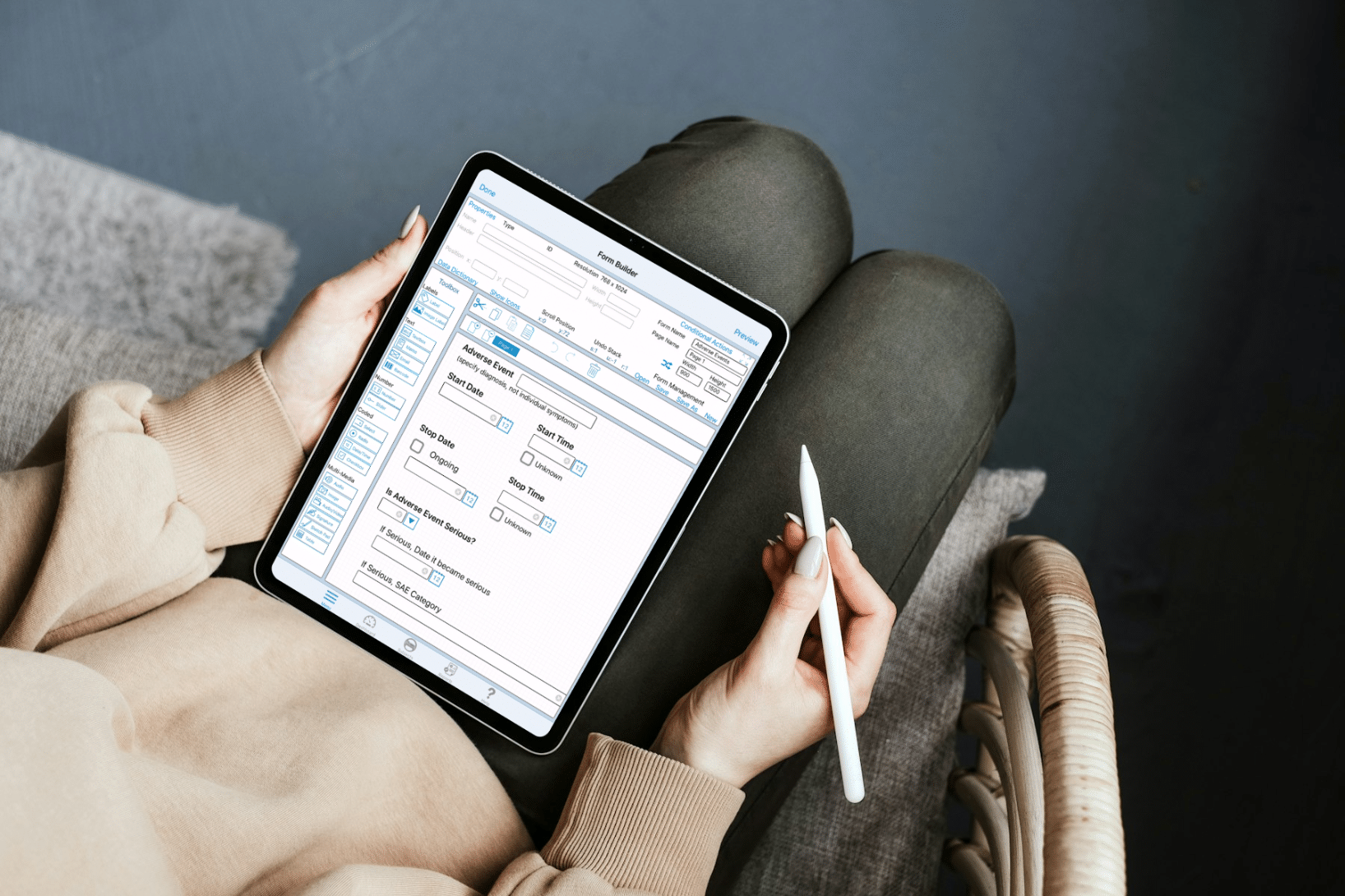
What is an EDC System?
An electronic data capture (EDC) system is software used to collect, manage, and store clinical research data electronically. By replacing paper-based case report forms with digital data collection, EDC systems support timely data entry, automated validation checks, query management, and ongoing study monitoring.
TrialKit extends these capabilities with a unified, cloud-based environment accessible through the web and native applications for iOS, Android, and macOS. Research teams can collect data at clinical sites, support remote participation, and incorporate information from other TrialKit modules and external systems.
With configurable study designs, mobile access, and embedded intelligence through Floyd, TrialKit supports traditional site-based, hybrid, and decentralized clinical trials.
Why Choose TrialKit for Your EDC Needs?
TrialKit gives sponsors, CROs, and research teams greater control over study configuration, data collection, and ongoing data management. Its flexible architecture supports the requirements of individual studies while providing tools to manage changes, review data, and maintain oversight throughout execution.
Build and Validate with Floyd
Use Floyd to turn protocol requirements into configured eCRFs, complete with edit checks, conditional logic, and automated calculations. TrialKit’s built-in validation tools help teams test form behavior, document results, and review configurations before deployment.
Adapt to Protocol Amendments
Make controlled changes to study configurations as protocols evolve. TrialKit supports study versioning, testing changes before deployment, and migrating participants or sites to updated versions while data collection continues.
Manage Data Review and Monitoring
Support configurable review workflows, field-level source data verification, electronic signatures, and query management. Role-based review levels, batch review options, and monitoring reports help study teams track data review progress and maintain oversight.
Reuse Forms and Study Configurations
Build on existing work with reusable form libraries, field definitions, and conditional actions. Import previously validated forms into new studies, adapt configurations to specific protocols, and track validation status when changes are made.
Capture Data Across Web and Mobile
Collect and review study data through the web or TrialKit’s native mobile applications. Support site-based and remote data collection with device-flexible workflows that accommodate traditional, hybrid, and decentralized research.
Manage Multiple Studies and Sites
Access multiple studies through a single sign-on, with granular permissions and configurable access rights. Give sponsors, CROs, investigators, and site personnel access to the studies, forms, and functions appropriate to their roles.
Resolve Queries and Track Changes
Identify discrepancies through automated edit checks, manage data queries, and monitor their resolution. Detailed audit trails provide visibility into data changes and user activity, supporting data traceability throughout the study.
Access Data and Reports Throughout the Study
Monitor study activity, review data status, and access configurable reports as information is collected. TrialKit’s reporting capabilities help teams examine study progress and identify areas requiring attention.
From Study Configuration to Data Review
TrialKit brings the tools needed to configure, validate, capture, and review clinical research data into a unified environment.
Configure
Build CRFs, define visit schedules, establish edit checks, and set up study workflows.
Validate
Test form logic and configurations, document results, and use synthetic data to evaluate study scenarios.
Capture
Collect clinical data from sites, mobile devices, participants, and integrated data sources.
Review and Analyze
Manage queries, perform source data verification, monitor review status, and examine study data through reporting and Floyd-assisted analysis.
Extend EDC With TrialKit’s Unified eClinical Platform
Electronic data capture is one part of the clinical research workflow. TrialKit brings EDC together with additional eClinical capabilities in a unified platform, helping teams manage related study activities and data without relying on multiple disconnected systems.
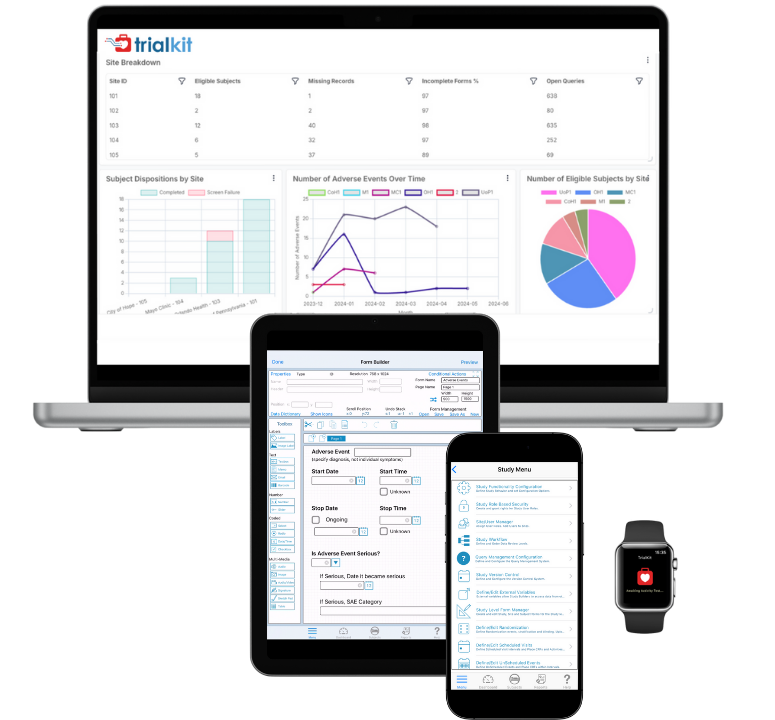
eSource & Direct Data Capture Software | TrialKit
Collect source data directly at the point of care, online or offline. Eliminate duplicate entry and reduce errors with real-time, site-friendly data capture.
Read more →eCOA and ePRO Solutions for Clinical Trials | TrialKit
Let patients report outcomes from anywhere. Our mobile-friendly design ensures a smooth experience for in-clinic or remote participation across all device types.
Read more →eConsent for Clinical Trials | TrialKit
Simplify consent while staying compliant. Secure, remote-ready workflows make it easy to inform and onboard participants from any location.
Read more →eTMF for Clinical Trials | TrialKit
Organize and store essential trial documents in a secure, compliant, cloud-based system. TrialKit’s eTMF makes it easy to maintain inspection readiness with real-time access, version control, and audit trails.
Read more →Randomization & Trial Supply Management (RTSM) | TrialKit
Inventory/Trial Supply Management module for web and mobile can be configured to randomize and track subjects, drug supply, devices and inventory throughout the course of a study.
Read more →TrialKit Payment Manager
Track and manage site payments accurately and on time. Automate payment calculations, streamline approvals, and reduce administrative burden, without relying on spreadsheets or third-party tools.
Read more →Clinical Adjudication Software for Clinical Trials | TrialKit
Coordinate blinded adjudication processes with ease. TrialKit’s adjudication tools support event tracking, committee workflows, and secure documentation, all in one place.
Read more →Medical Coding for Clinical Trials | TrialKit Coder
Simplify medical term standardization with integrated support for WHODrug and MedDRA coding. TrialKit enables efficient, compliant coding workflows that reduce errors and improve data consistency.
Read more →Clinical Trial API Integrations | Open eClinical Platform | TrialKit
First-of-its-kind technology using our proprietary machine-learning API to transform unstructured EHR or other data into usable data, helping you streamline workflows and improve data accuracy at the source.
Read more →Televisits for Decentralized Clinical Trials | TrialKit Engage
Bring the visit to the patient. Built-in video conferencing allows for remote assessments, improved accessibility, and higher retention, without switching platforms.
Read more →PACS Imaging Software | TrialKit PACS
Upload, store, and view DICOM images right inside TrialKit. No separate imaging platform needed. Just secure, compliant access when and where you need it.
Read more →AI for Clinical Trials | Floyd
Design, build, simulate, and analyze clinical studies in one connected, insight-driven system.
Read more →

Who Benefits From TrialKit EDC?
TrialKit supports clinical research teams with different study responsibilities, giving each group access to configurable tools and workflows that align with their roles.
- Sponsors: Maintain visibility into study progress, manage data across sites, and retain greater control over database configuration and amendments.
- Contract Research Organizations (CROs): Manage multiple studies and sponsors, reuse established study configurations, and support consistent data management processes across research programs.
- Investigators and Research Sites: Enter and review study data through accessible web and mobile interfaces, manage assigned activities, and participate in electronic review and sign-off workflows.
See How TrialKit Can Support Your Next Study
From protocol-driven study configuration to data collection, validation, and analysis, TrialKit gives your team the tools to manage clinical research data within one unified environment.
See how TrialKit EDC and Floyd can support your study requirements while giving your team greater flexibility and control throughout execution.