
Floyd AI Security, Data Privacy & Validation
Floyd brings AI-assisted study building, simulation, validation, and analysis into TrialKit while operating within the platform’s established security and governance framework. Controlled access, study-level data isolation, and human oversight help clinical research teams use AI while maintaining control over their study data and workflows.
Explore how Floyd handles information, protects data between studies, and supports established validation processes.
How Floyd Protects Your Study Data
Floyd operates within TrialKit, following the platform’s security and access controls. Users determine what study information is shared with Floyd, and each study maintains its own isolated sessions.
Four principles guide how Floyd handles study data and supports responsible AI use.
Controlled Access
Floyd access requires Host Admin approval. Authorized users control the study information shared with Floyd, and access to analytics is managed through role-based permissions.
Study-Level Data Isolation
Floyd maintains separate sessions for each study. Information shared within one study’s sessions is isolated from other studies and is used only within that study’s context.
No Training on Customer Data
Floyd uses Google Gemini models. Customer prompts, uploaded files, and study data are not used to train or improve AI models.
Human Review and Verification
Floyd-generated study components are available for review in TrialKit’s standard builders. Teams can test configurations, evaluate results, and document validation activities according to their standard operating procedures (SOPs).
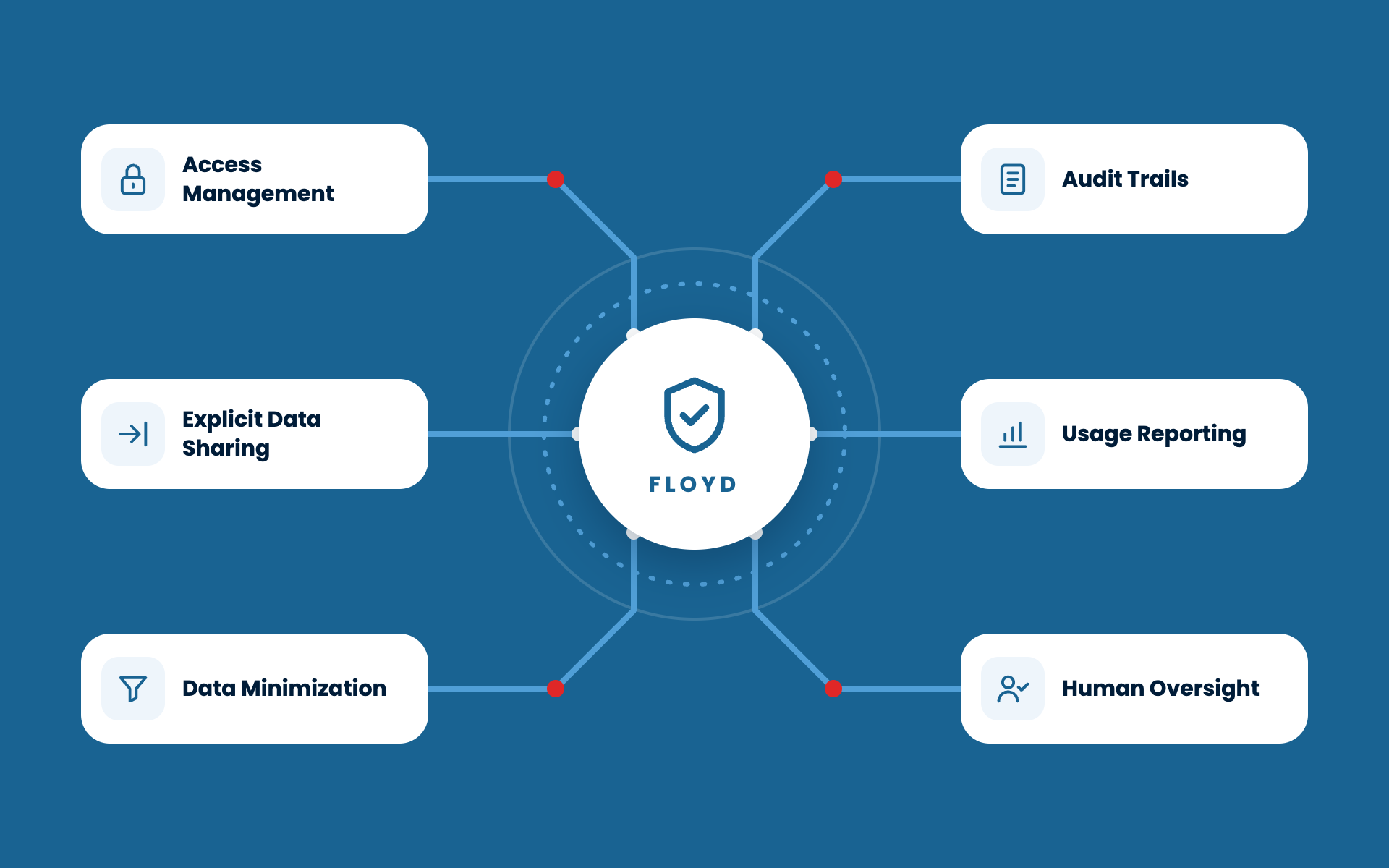
Governance and Oversight Within TrialKit
Floyd incorporates controls that help research teams manage AI use throughout the study lifecycle.
- Access management: Host Admin approval governs access to Floyd, with role-based permissions for analytics.
- Explicit data sharing: Users control the information provided to Floyd for each task.
- Data minimization: Teams can limit shared information to what is required for the task.
- Audit trails: Changes are recorded within TrialKit’s established audit trail framework.
- Usage reporting: Floyd usage can be tracked by type and study.
- Human oversight: Study teams review AI-generated configurations and retain responsibility for scientific and regulatory decisions.
Study-Level Isolation: How Floyd Keeps Data Separate
Each study works with Floyd through its own private sessions. Information shared within those sessions is used as context for that study and does not carry over into another study.
Floyd also draws on general knowledge of how TrialKit operates, including study structures, forms, fields, and data organization. This platform knowledge does not contain customer study data.
Floyd Platform Knowledge
General information about how TrialKit works. Contains no customer study data.
Study A
Private Floyd sessions containing only information shared by authorized users within that study.
Study B
Separate private Floyd sessions. Information from Study A is neither visible nor available to Study B.
No Cross-Study Data Sharing. Study sessions remain isolated from one another.
AI Model and Data Handling
Floyd uses Google Gemini models to support its AI capabilities within TrialKit. Understanding how these models process information is an important part of evaluating AI technology for clinical research.
-
Which AI models power Floyd?
Floyd uses Google Gemini models to perform AI-assisted activities within TrialKit.
-
Where is information processed?
Information provided to Floyd is processed through Google’s Gemini service. Additional details about data processing arrangements are available through Crucial Data Solutions’ Data Processing Agreement (DPA).
-
Is customer data used to train AI models?
No. Customer prompts, uploaded files, and study data are not used to train or improve AI models.
-
Can information from one study influence another?
No. Floyd sessions are isolated at the study level, and information shared within one study’s sessions is not available to other studies.
-
Who reviews AI-generated work?
The study team reviews Floyd’s output before configurations are moved into production.
For additional information about security controls, data privacy, and processing arrangements, visit the Crucial Data Solutions Trust Center.
How Floyd Supports Study Validation
Floyd can assist with study configuration and validation activities while allowing teams to follow their established review, testing, and documentation procedures.
Crucial Data Solutions validates the TrialKit platform. Individual study teams remain responsible for validating their study configurations according to their own SOPs and applicable requirements.
Floyd supports this process through the following activities.
Review AI-Generated Study Components

- Forms, visit schedules, and edit checks generated by Floyd are available within TrialKit’s standard study builders. Teams can inspect, review, and modify configurations before proceeding with validation.
Export Study Design Documentation
- TrialKit supports the export of study design information, including roles, data dictionaries, casebooks, and visit schedules. These materials can be used to develop and document pass/fail testing procedures.
Run Automated Edit-Check Tests
- Floyd supports automated edit-check testing to evaluate configured study logic. Test results are logged in TrialKit and can be exported as supporting validation evidence.
Simulate Studies With Synthetic Participants

- Floyd can generate synthetic participant data to evaluate study configurations and workflows. These simulations run in designated AI sites, keeping generated test data separate from live study data.
Review Validation Results
- Floyd provides records of generated and stored data alongside a synopsis of evaluated conditional actions. Teams can use these records to review system behavior and identify configurations requiring further attention.
Test Roles and Revalidate After Changes

- Study teams can test role-based permissions, blinding requirements, and visit windows in a development environment. Following protocol amendments or configuration changes, relevant validation activities can be repeated.
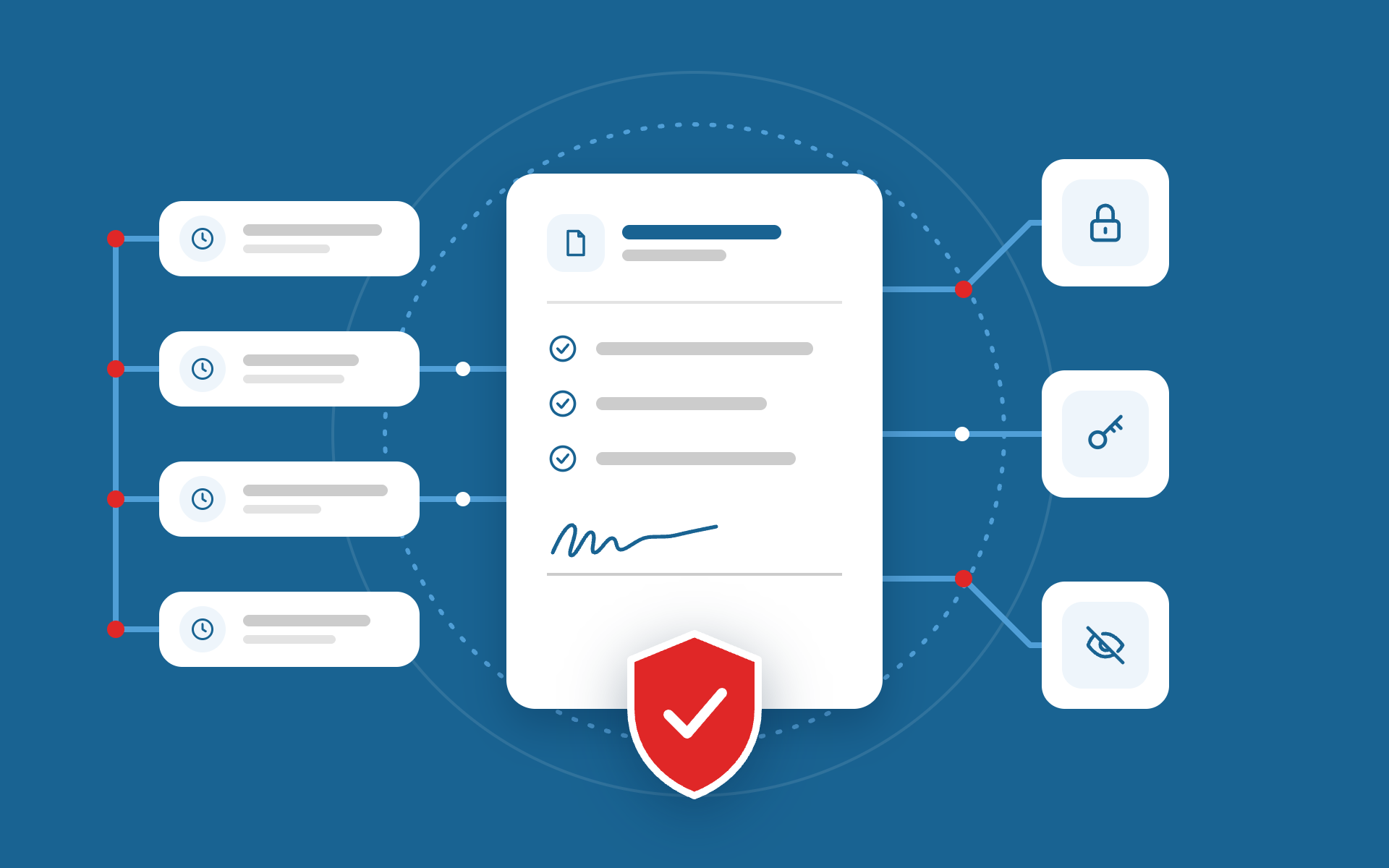
Security, Privacy, and Regulatory Compliance
Floyd operates within the TrialKit platform, which supports the security, privacy, and regulatory requirements relevant to clinical research.
Regulatory frameworks supported:
- 21 CFR Part 11
- HIPAA
- GDPR
Aligned with additional security frameworks:
- ISO/IEC 27001
- SOC 2
- NIST Cybersecurity Framework
- CSA STAR
Explore Floyd With Confidence
From study configuration through simulation, validation, and analysis, Floyd brings AI capabilities into TrialKit with controlled access, study-level data isolation, and human oversight.
See how Floyd can support your clinical research workflows while helping your team maintain control over study configurations and validation activities.